
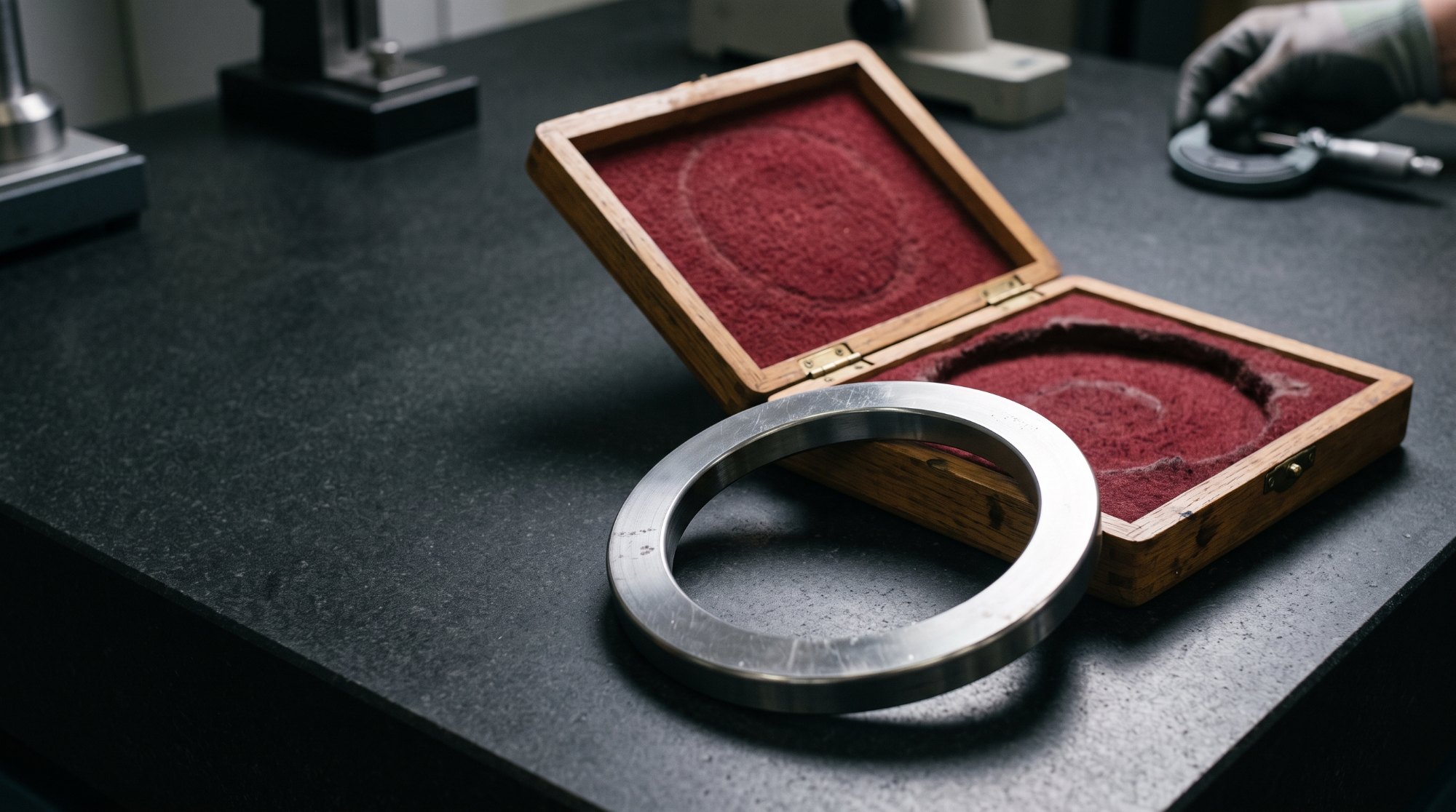
A 60 mm GO ring gauge comes back from calibration marked unserviceable. The bore carries four pits, none larger than half a millimetre, all within the gauging length. The gauge was used in April, wiped, and put in its box. It sat in a steel cupboard through July.
Carbon and alloy gauge steels corrode slowly in dry air and quickly once relative humidity passes roughly 60%. Coimbatore runs between 70% and 90% through the south-west monsoon, and an unconditioned store room tracks the outside air within a few percent. A gauge left protected only by the oil film it arrived with is exposed for eight to ten weeks.
Three things do most of the damage, and all three are avoidable.
Fingerprints. Skin leaves salt and moisture behind. Chlorides break down the passive layer locally, which is why a print becomes a visible etch in two or three weeks and a pit in a season. Prints on a gauging surface are worse than dust.
Trapped moisture in a closed box. A gauge put away warm in a sealed case condenses inside it as the shop cools overnight. The case then holds that water against the steel.
Dissimilar contact. Gauges stacked against each other or dropped loose in a drawer wear through the protective film at contact points, and those points corrode first.
| Method | Protection | Notes |
|---|---|---|
| Bare in a drawer | None | Guaranteed damage by September |
| Oil film only | Weeks | Film migrates and thins, needs renewing |
| VCI paper, closed box | 12 to 24 months | Replace the paper annually, it is consumed |
| Silica gel in a sealed case | Months | Only while the gel is active |
| VCI plus silica gel, sealed | Best available without a cabinet | Standard for gauges used seasonally |
| Dry cabinet at 40% RH | Indefinite | Worth it for a master set |
Vapour phase corrosion inhibitor paper works by releasing a compound that settles on the steel, so it needs an enclosed volume to work in. In an open drawer it does nothing. One sheet folded around a gauge in its case is right; a sheet lying near it is not.
Indicating silica gel changes colour when it is spent, which is the only reason to buy the indicating kind. Regenerate it in an oven at about 120 °C for two hours and it goes back to work. Most shops that use silica gel have never regenerated any of it, which means they have decorative blue beads and no protection.
Oil films protect well but they are not free. A film measurably affects a close fit, and 1 to 2 µm of oil on a gauging surface is enough to matter at IT6. Every oiled gauge must be wiped with a lint-free cloth and a solvent before use, then re-oiled when it goes away.
Cotton gloves absorb sweat and hold it against the steel, which makes them worse than clean bare hands for anything held for more than a moment. Nitrile gloves are the right choice for gauging surfaces. Whichever you use, wipe the gauge down before it goes back in the box, every time, including the day nobody has time.
Set gauges on a wooden or plastic rest rather than a steel bench. Steel-on-steel contact scuffs the film and adds a heat path you do not want.
At each calibration, look at the gauging surface under magnification and decide which of three states you are in.
Surface staining, no depth. A brown discolouration that a cloth and light oil remove, leaving no mark you can feel with a fingernail. The gauge is fine. Find out why it stained.
Pitting outside the gauging zone. Pits on a handle, a flank outside the engagement length, or the outside diameter of a ring. Cosmetically poor, functionally irrelevant. Clean it, oil it, keep using it, note it on the record.
Pitting inside the gauging zone. A pit you can catch a fingernail in, anywhere the gauge contacts the part. The gauge is finished as a gauge. It cannot be polished out, because polishing changes the size, and it will hold swarf and moisture and grow. Scrap it or send it for reconditioning if the size allows a rework to the next class.
The cheapest protection remains the boring one. Wipe it, oil it, wrap it in VCI paper, close the box. A ring gauge costs several thousand rupees and a sheet of VCI paper costs a few, and one of those numbers goes up every monsoon.

Most gauge mistakes are not exotic — they are the same handful of habits repeated across every shop. A field guide to the errors that quietly corrupt inspection, and the fixes that cost nothing.
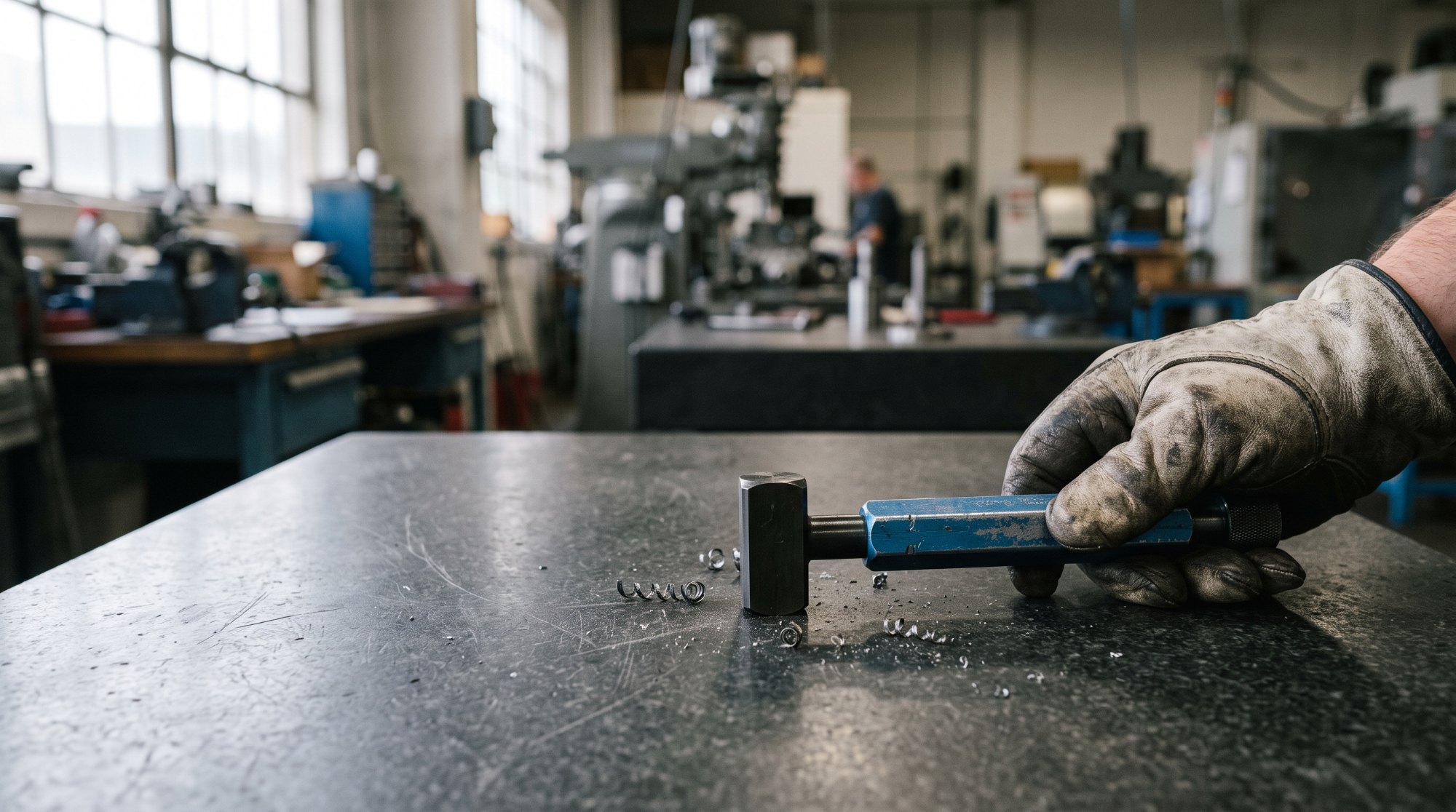
Most gauge failures we see are not manufacturing defects — they are handling and maintenance issues. A practical maintenance routine for plain plug and ring gauges that actually works on a real shop floor.
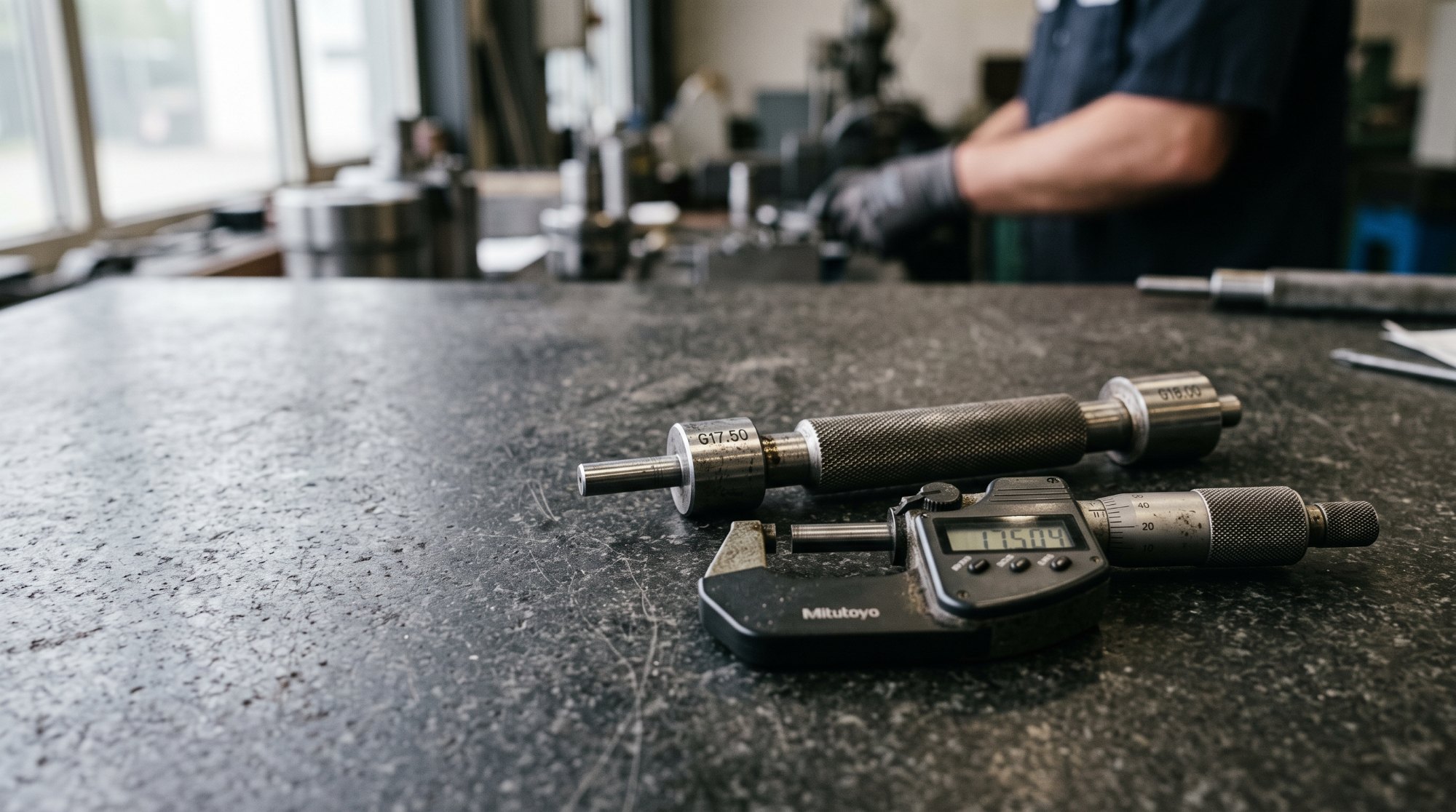
A gauge register is not a list of gauges — it is the system that keeps calibration, ownership, and recall under control. How to build one that works on a real shop floor.