
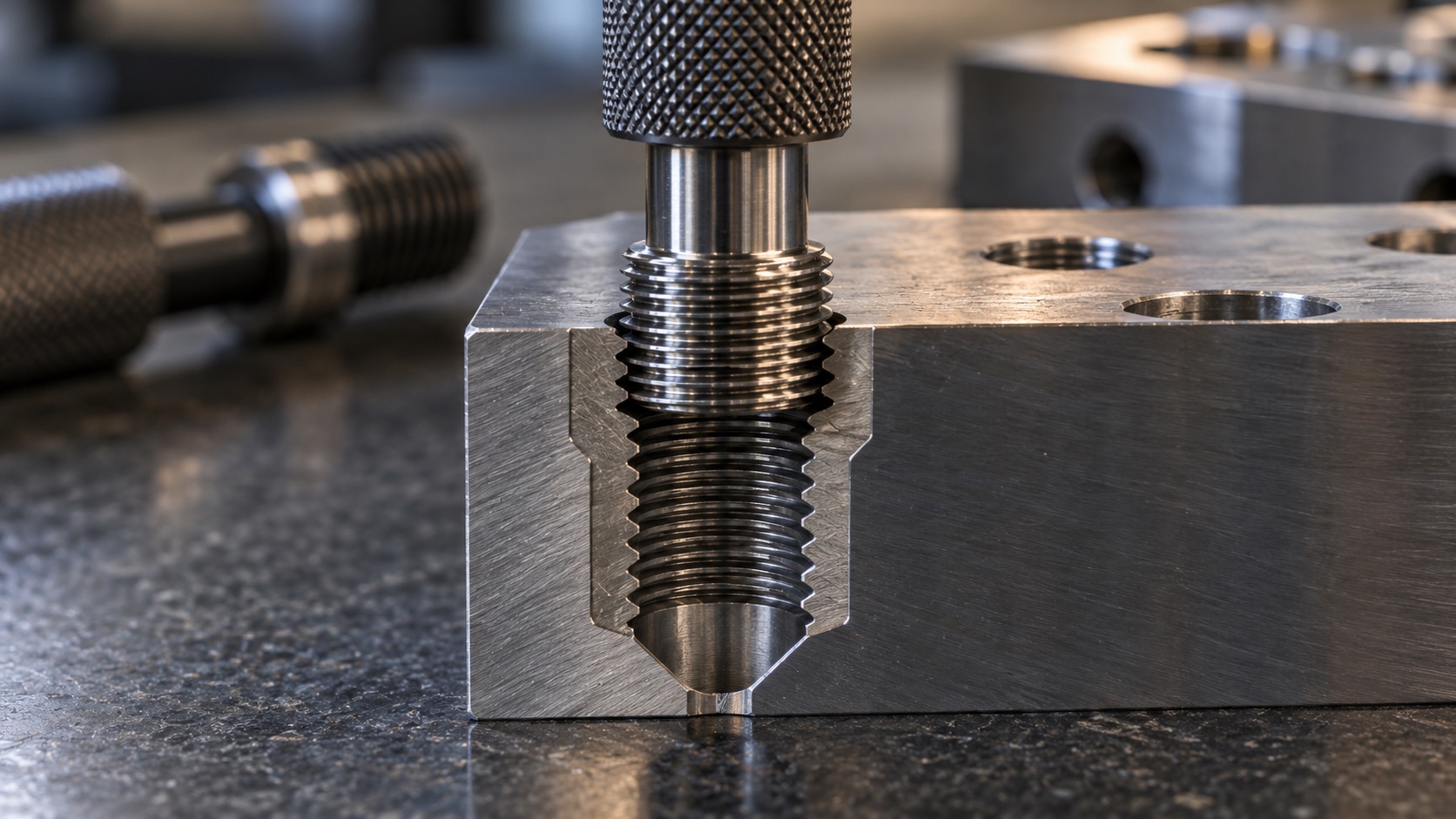
A thread plug gauge in a through hole is simple: the GO end runs the full length and the NO-GO end tries and fails. A blind hole changes the question. The tap cannot cut to the bottom, so the thread ends in incomplete turns, then a cavity left by the drill point. A gauge that bottoms in that cavity tells you nothing about the thread you need.
Common practice is to drill at least about three pitches deeper than the full thread depth. For M10 x 1.5 that is roughly 4.5 mm of extra depth, so the tap and its chamfer have room.
A standard GO plug has a chamfered lead of one or two turns. Run it into a blind hole and the lead may reach the incomplete threads before the full-depth threads have been checked, or it may stop against the chamfer. The result is a GO that passes a hole whose full thread is too shallow, or a gauge that jams short of a hole that is fine.
For blind holes ask for a GO gauge with a short, fully formed lead, so it threads into the last full turn, and a thread length matched to the drawing. Gauges for ISO metric threads are specified in ISO 1502, and the class limits come from ISO 965-1. Then define what counts as pass: the GO gauge must turn in to the full thread depth by hand, and the drawing or standard states how far the NO-GO may start in; follow that figure rather than a rule of thumb.
A plug gauge checks thread form and pitch diameter. It does not prove there is enough full thread. For that, mark the gauge at the specified depth, or use a depth gauge on the hole before tapping. Depth and thread class are two checks, and a blind hole needs both. Our note on a GO gauge that will not enter covers the other usual reasons a gauge stops short, such as chips left in the cavity.
See our thread plug gauges, or send the hole drawing and we will advise on the right lead and length. Pitch values for common sizes are on our M10 and M8 pages.
DSN Enterprises manufactures thread plug, ring and setting gauges to order in Coimbatore — metric, NPT, BSP, UNC and UNF — with NABL-traceable certificates.
Or call +91 93631 22005.
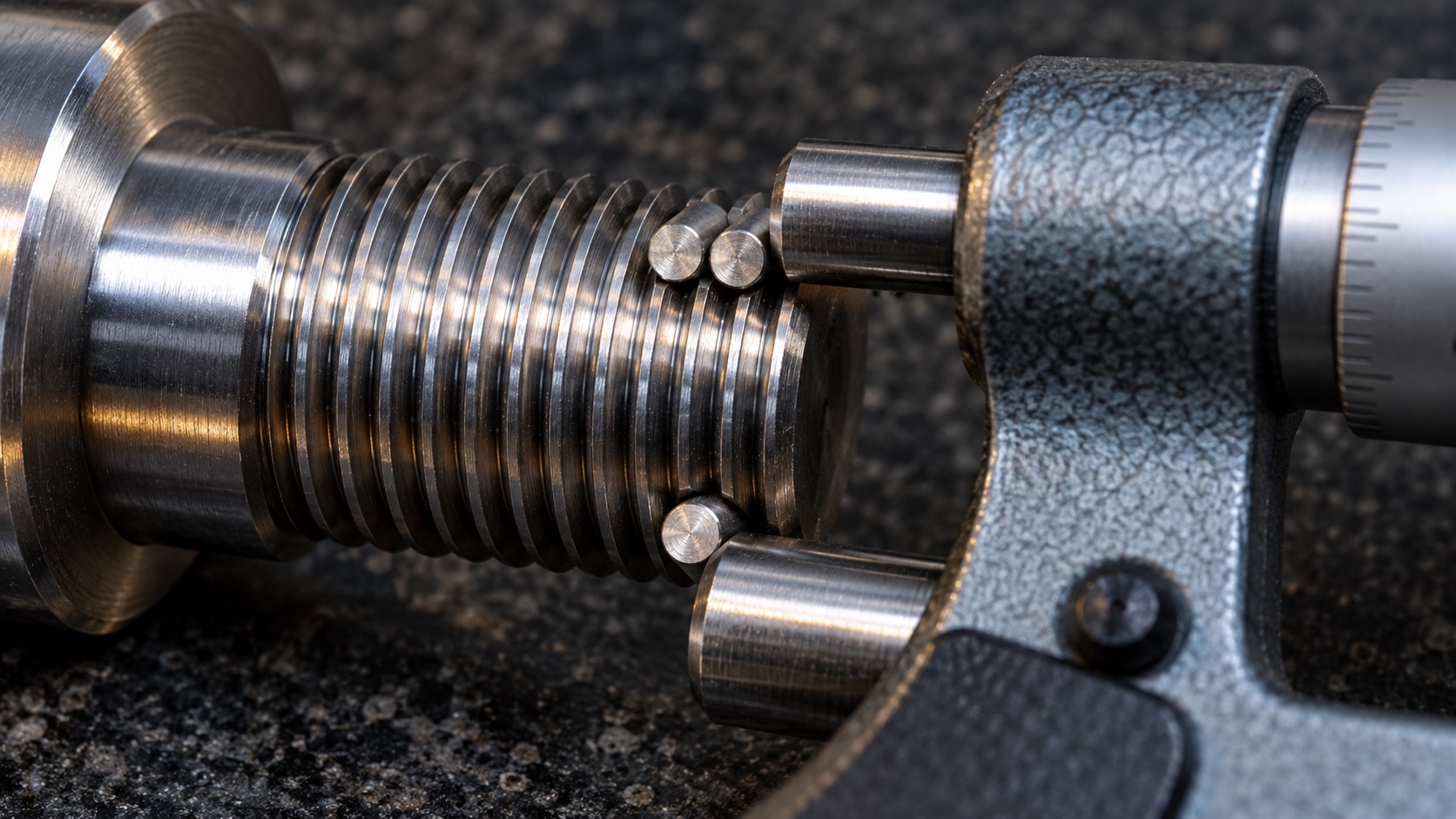
Pitch diameter is the number that decides whether a thread fits, and you cannot reach it with a plain micrometer. Three precision wires and a micrometer can, if you pick the right wire size and trust the arithmetic.
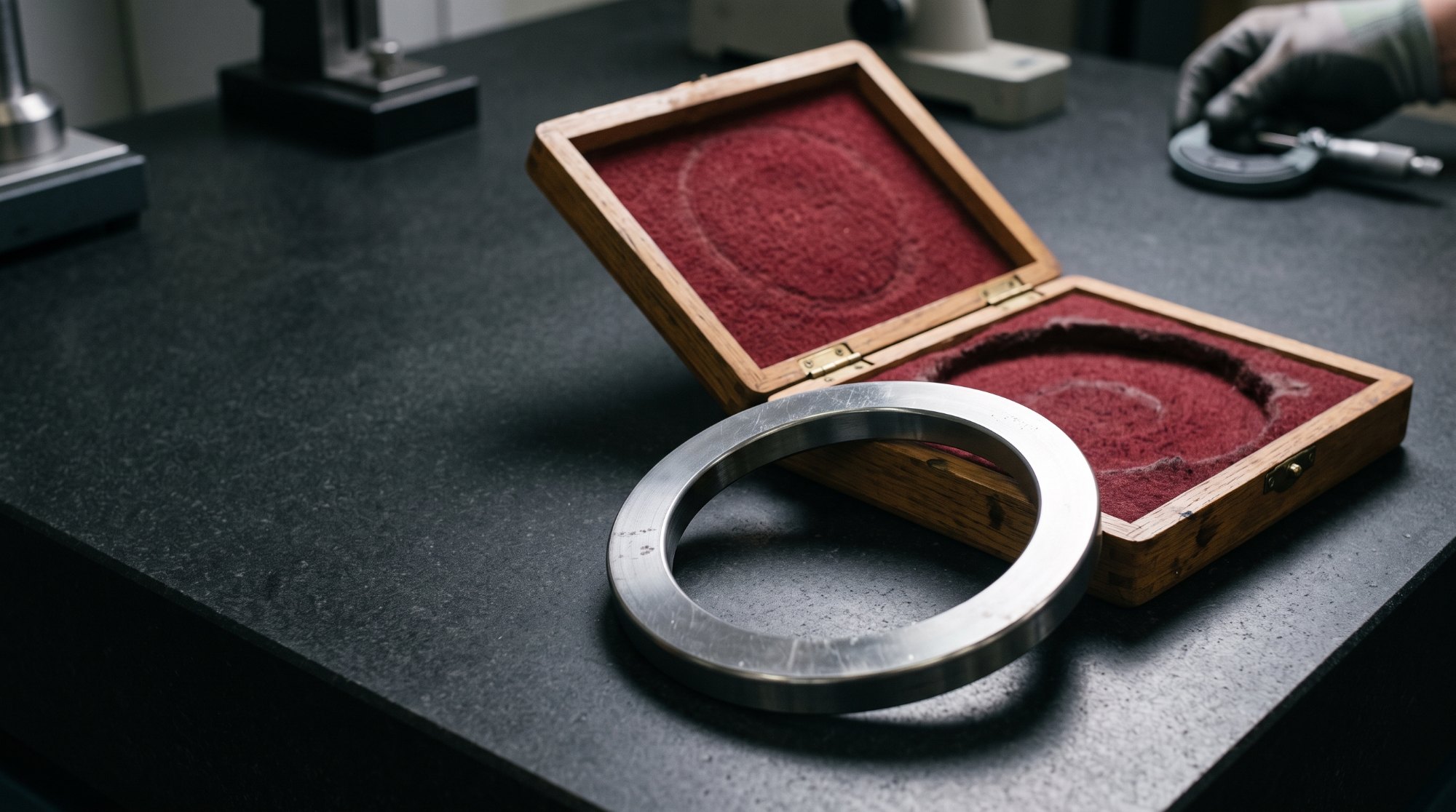
Steel corrodes noticeably above about 60% relative humidity, and a monsoon shop sits at 80%. Storage, handling and the inspection that catches pitting before it reaches the gauging surface.

Internal and external threads need matched inspection strategy. Compare plug vs ring gauges, common mismatches, and how to specify a coherent gauge set.