
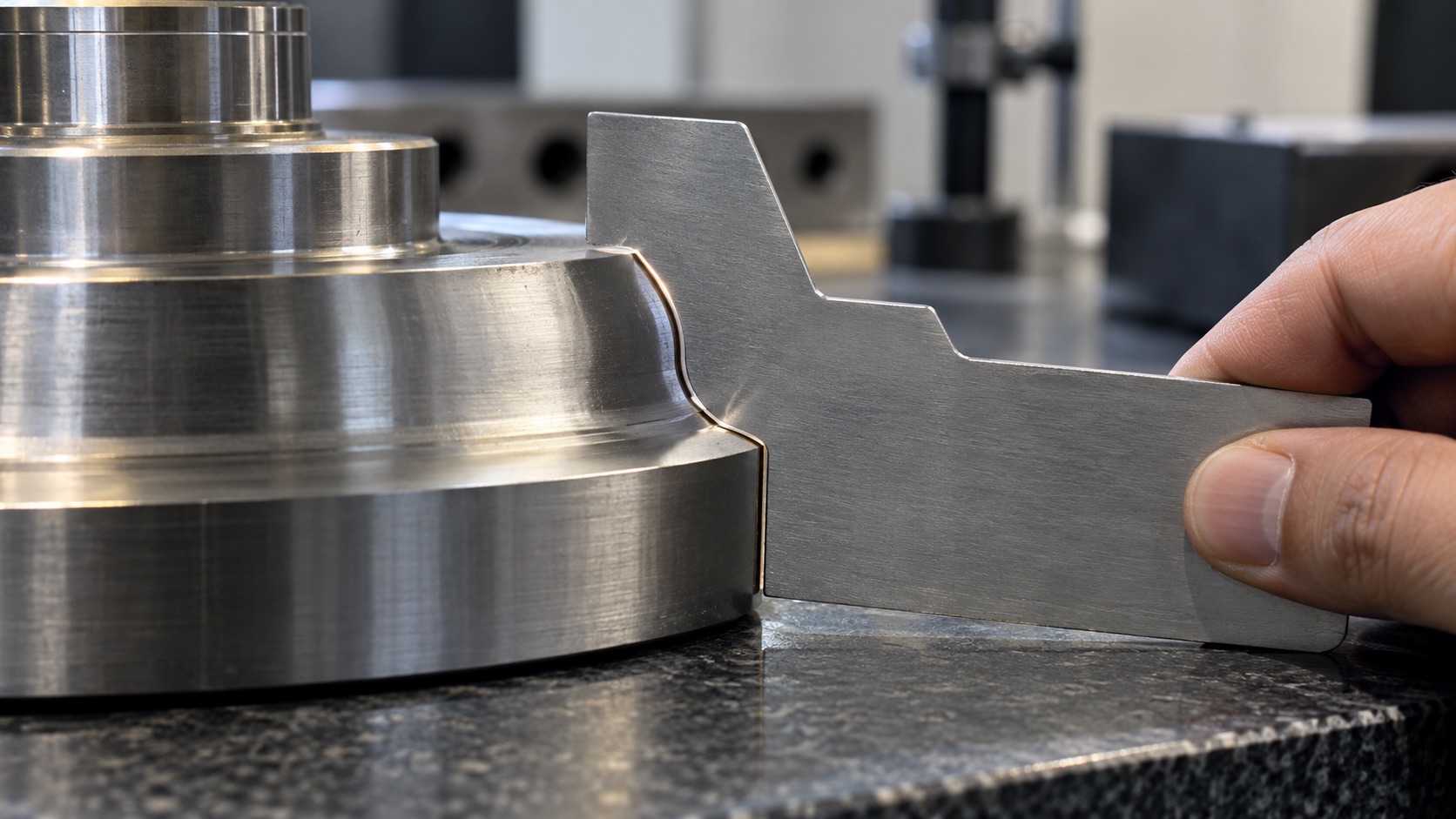
Some features are awkward to measure. An outer contour with a radius, a step and a chamfer is described by a drawing as a shape, and a vernier reports lengths, not shapes. A profile gauge, also called a contour or template gauge, checks the shape directly.
The gauge is a hardened steel template with its edge cut to the nominal profile, or to the profile at the limit of tolerance. The operator offers it to the part against a bench or a datum face. Where the part is within limits the template sits flush. Where material is proud, the template rocks. Where it is undersize, light shows through. Held up against a window or a lamp, a gap of roughly 0.01 mm is visible to a trained eye.
A template checks form against a limit, not size to the micron, and the visible-gap method is qualitative. As a working rule, profile tolerances of 0.1 mm and looser suit a template well; at 0.02 mm and tighter, or when you need the actual deviation for process control, a CMM or optical comparator is the right tool. On the drawing the requirement is a profile tolerance under ISO 1101. Many shops use both: the template on the floor for go / no-go, and a measuring machine to audit a sample. This is the same split as in what a go / no-go gauge proves.
The template also wears where it touches parts. Check it against a master at a fixed interval, for example monthly on a part that runs every day, and retire it when the edge is worn, using the thinking in our wear limit guide.
We make profile and form gauges to drawing as part of our custom gauges. Send the drawing for a quote.
Send us the feature and the drawing. DSN Enterprises manufactures custom gauges — form, spline, ACME, buttress and taper — for the cases where a catalogue tool cannot inspect the feature.
Or call +91 93631 22005.

A wheel that will not seat, a flange that fights the studs: both usually trace back to the pitch circle diameter. Here is how a PCD gauge checks it faster than a vernier, and what to send when you need one made.
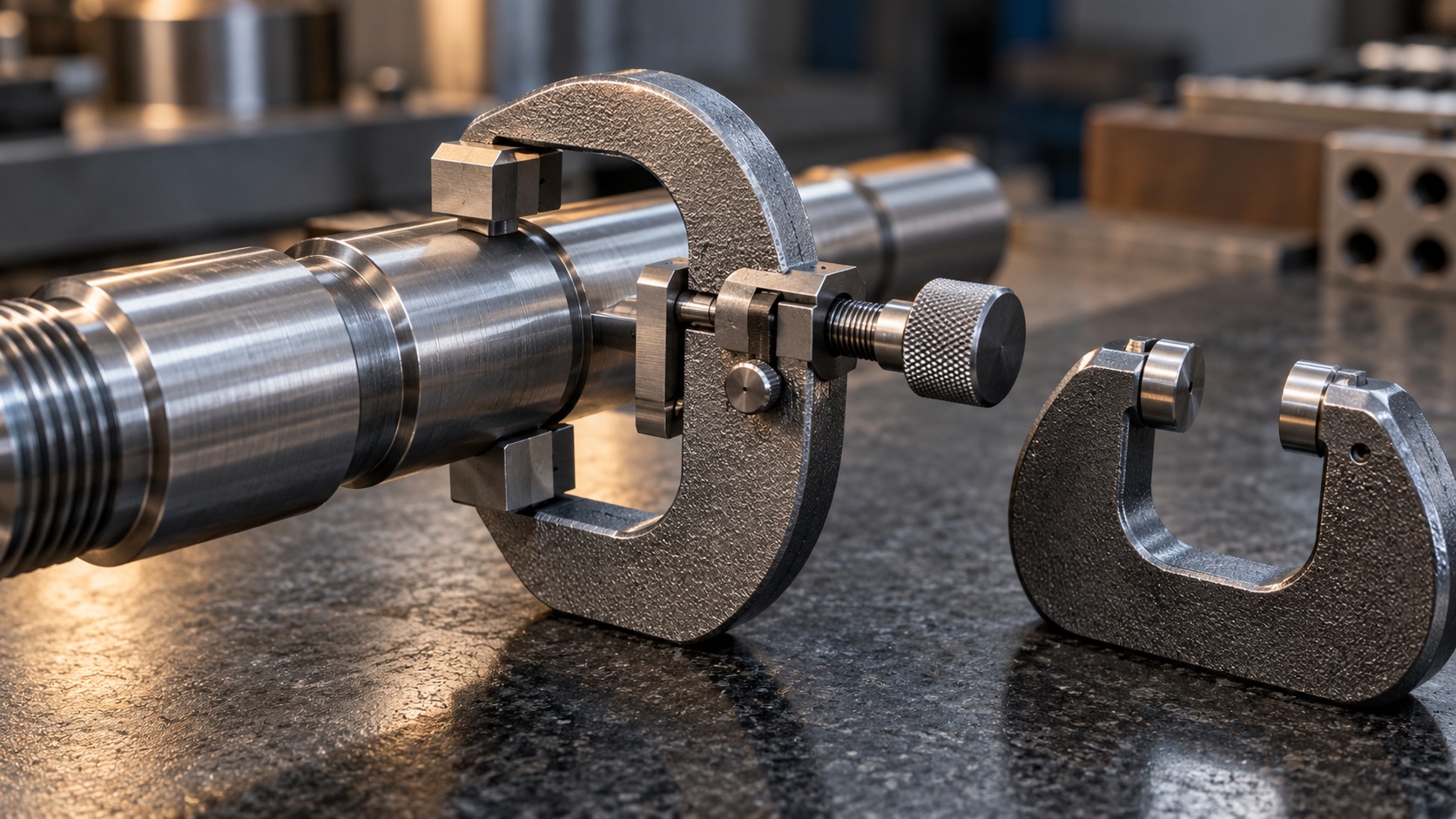
A fixed snap gauge is made once for one size. An adjustable one is set to size with slip gauges and can be reset as the anvils wear. Which is cheaper depends on how long the job runs.

A gauge register is not a list of gauges — it is the system that keeps calibration, ownership, and recall under control. How to build one that works on a real shop floor.