
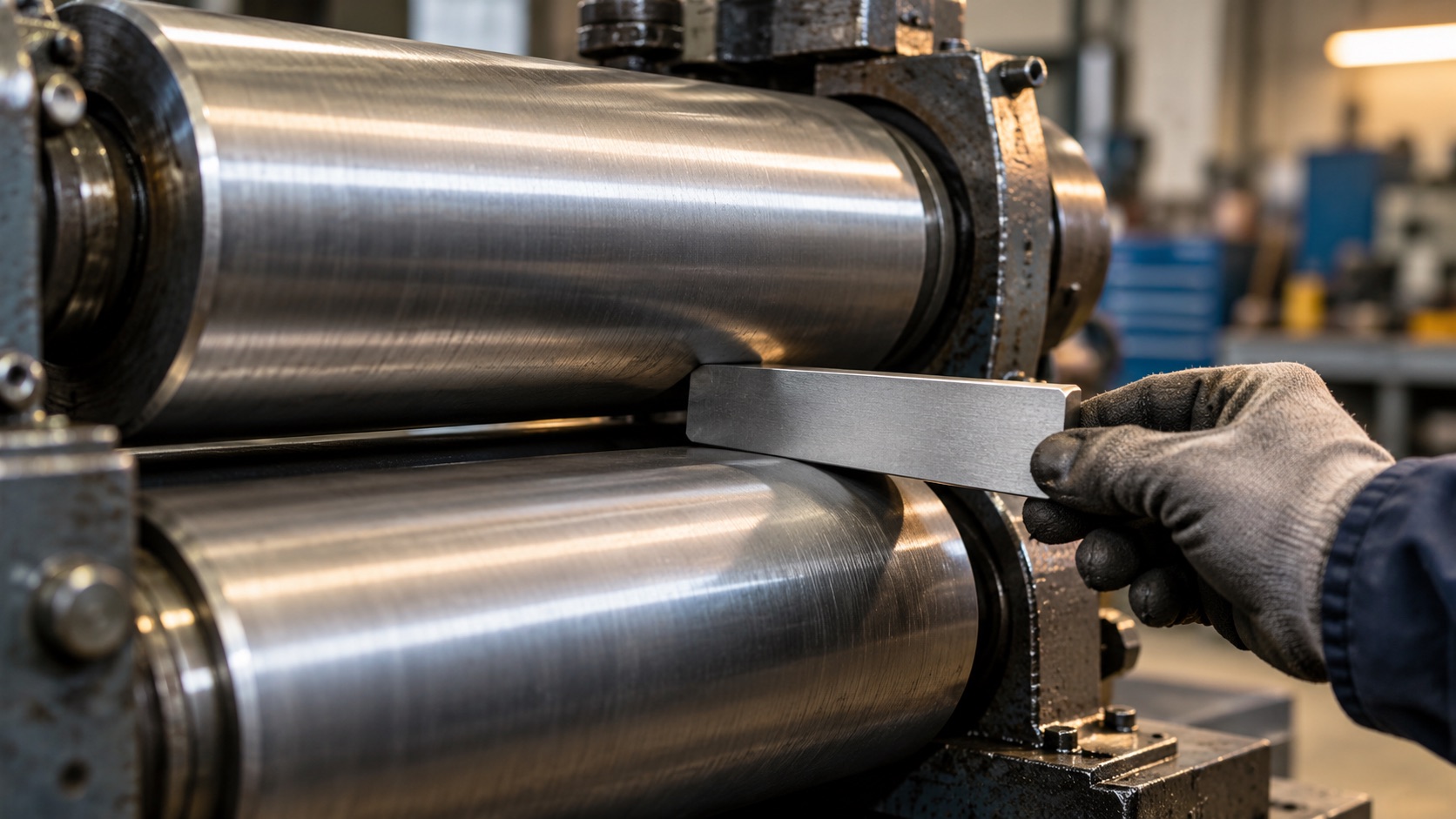
On a rolling machine, the distance between the rollers sets the result. Too wide and the part is under-worked; too tight and it overloads the machine or ruins the part. Operators often set the gap with a vernier or a feeler and a judgement call, and two operators set it two ways. A fixed gap gauge removes the judgement.
The gauge is a hardened steel bar ground with two steps. The thinner step is the GO end, equal to the minimum acceptable gap. The thicker step is the NO-GO end, equal to the maximum. For a gap specified as 2.00 mm with a 0.05 mm tolerance, the GO step is 2.00 mm and the NO-GO step is 2.05 mm. With the machine stopped and the rollers brought to their setting, the GO step must enter the gap and the NO-GO step must not. That is a limit gauge applied to a distance, using the same reasoning as a plug in a hole.
Distance, gap and profile checks are a regular part of our custom and special gauges work. Tell us the gap and the machine and we will advise on the gauge.
Send us the feature and the drawing. DSN Enterprises manufactures custom gauges — form, spline, ACME, buttress and taper — for the cases where a catalogue tool cannot inspect the feature.
Or call +91 93631 22005.
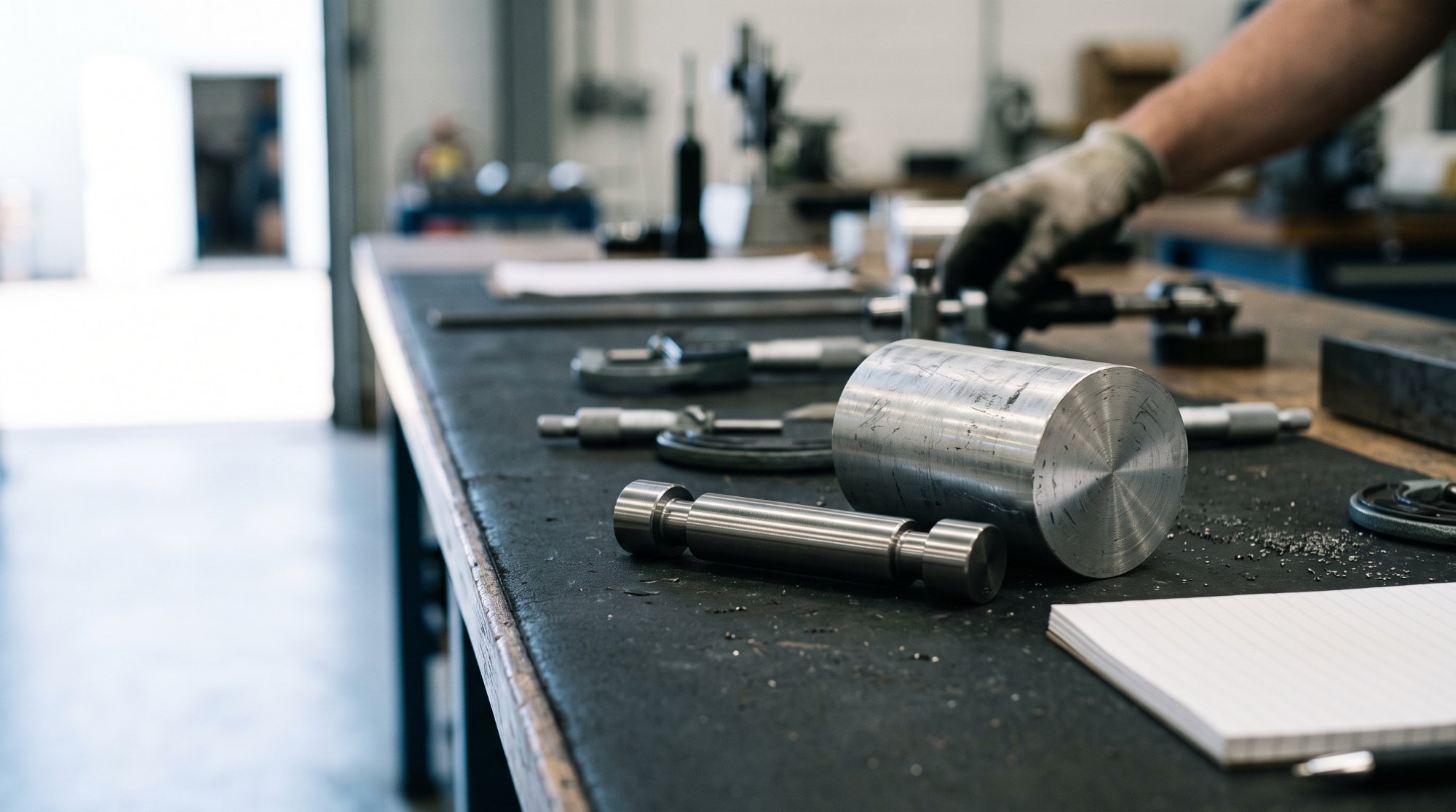
A worked error budget for thermal effects on gauge readings in Indian workshops without climate control. Differential expansion between steel gauges and aluminium/brass/titanium workpieces, soak

A wheel that will not seat, a flange that fights the studs: both usually trace back to the pitch circle diameter. Here is how a PCD gauge checks it faster than a vernier, and what to send when you need one made.
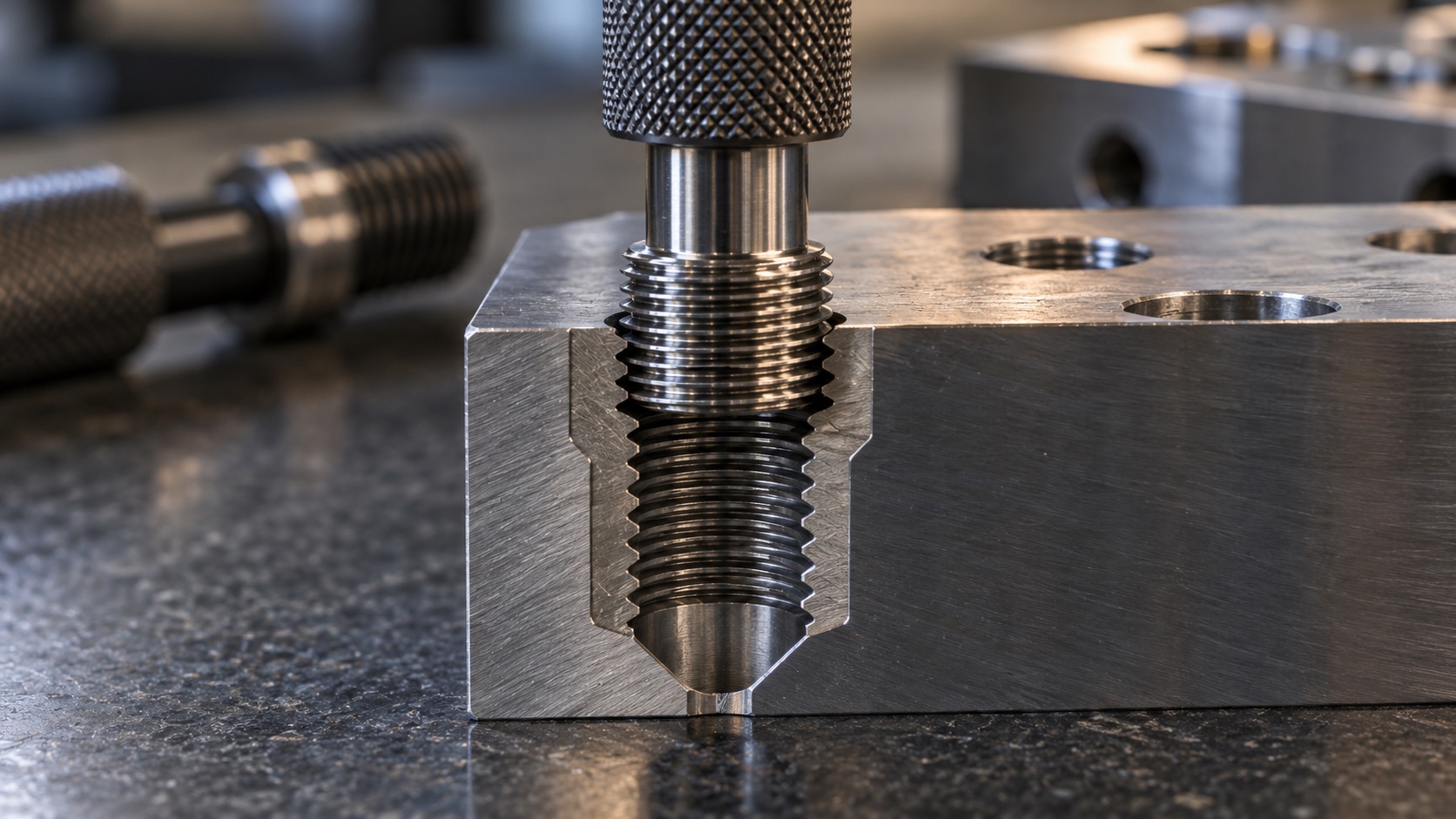
In a through hole the gauge runs out the far side. In a blind hole the thread ends in a drill point, and what the gauge can reach decides what you can claim about the thread.