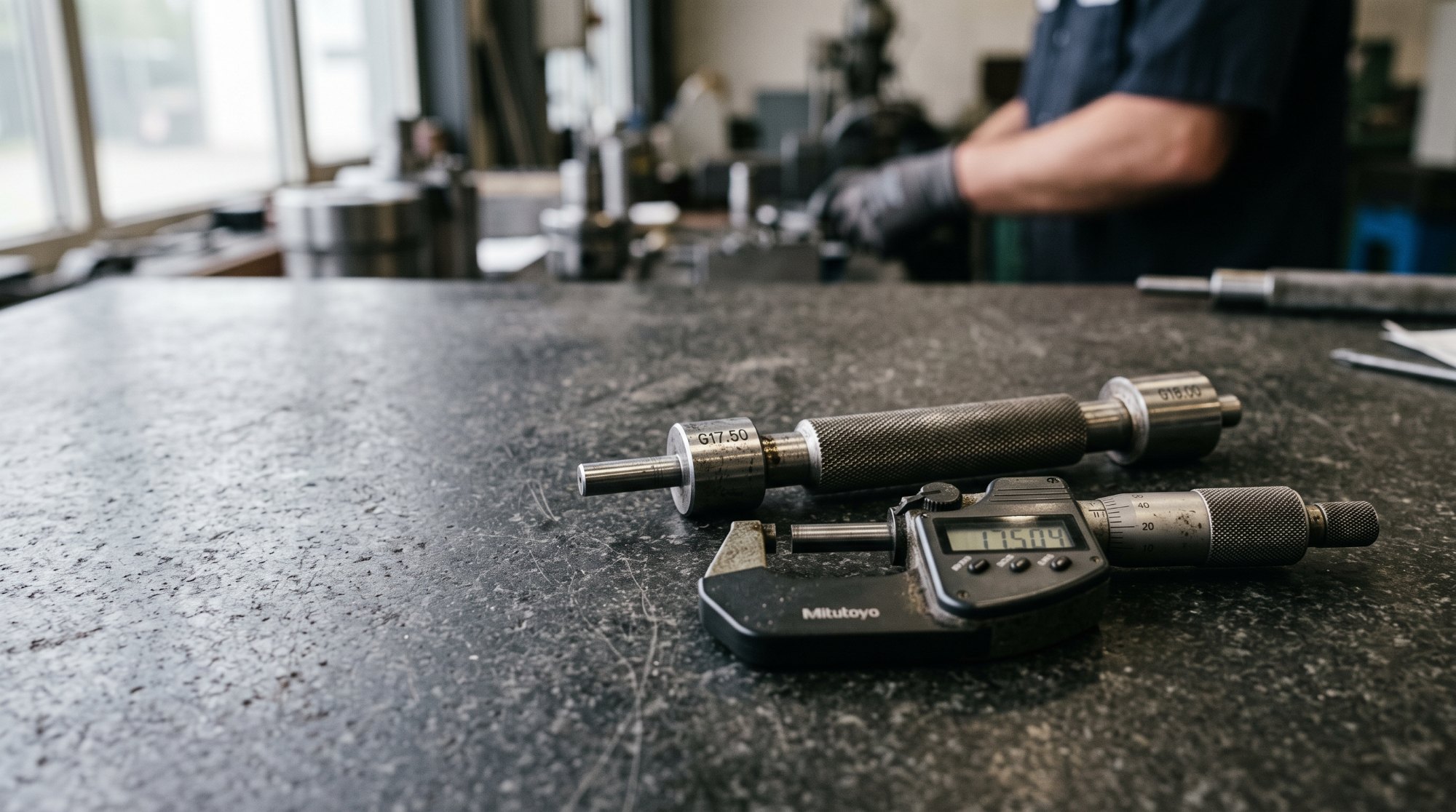
Mastering Thread Gauge Selection: A Definitive Guide to Precision Inspection
In the intricate world of manufacturing, where components must fit together seamlessly and perform flawlessly under demanding conditions, the integrity of threads is paramount. From the smallest medical device to the heaviest industrial machinery, a securely fastened, precisely machined thread is the backbone of reliability and safety. But how do engineers and quality control professionals ensure that every thread meets its exact specifications? The answer lies in meticulous thread inspection, and at its heart, the correct thread gauge selection.
At DSN Enterprises, India's leading manufacturer of precision gauges, we understand that selecting the right thread gauge isn't just about picking a tool; it's about safeguarding product quality, preventing costly rework, and ensuring long-term operational success. This comprehensive guide will demystify the process, providing you with the technical insights and practical wisdom needed to make informed decisions for your precision engineering needs.
Why Thread Gauging Matters: The Foundation of Quality and Reliability
Imagine the catastrophic consequences of a critical fastener failing due to an improperly manufactured thread – product recalls, equipment downtime, warranty claims, and irreparable damage to brand reputation. Thread gauging is the frontline defense against such scenarios. It's not merely a "good-to-have" but an indispensable step in modern quality control.
The primary goal of thread gauging is to ensure the interchangeability and functionality of threaded components. This means:
- Seamless Assembly: Parts fit together as intended, without force or play.
- Optimal Performance: Threads provide the specified strength, resistance to loosening, and load-bearing capacity.
- Cost Efficiency: Preventing defects early avoids expensive rework, scrap, and field failures.
- Compliance: Meeting stringent industry standards and customer specifications.
- GO Gauge: Designed to enter or assemble with the thread freely. It checks the maximum material condition (MMC), ensuring the thread is not too large (for internal threads) or too small (for external threads) and has sufficient material.
- Unified National (UN) Threads: Common in North America, these include UNC (Coarse), UNF (Fine), and UNEF (Extra Fine).
- Metric (M) Threads: The international standard, widely used globally (e.g., M8 x 1.25). Metric threads often include MJ series for aerospace applications.
- Pipe Threads: Critical for sealing and connection in fluid systems.
- NPT/NPTF (National Pipe Taper/Fuel): American standards, tapered for a seal.
- BSPP (British Standard Pipe Parallel): Parallel threads, often sealed with a gasket.
- BSPT (British Standard Pipe Taper): Tapered threads, similar to NPT but with different angles.
- Whitworth Threads (BSW, BSF): Historical British standards, still found in some legacy machinery.
- ACME and Buttress Threads: Specialty threads used for lead screws, jacks, and high-load applications.
- For UN Threads:
- Classes 1A, 1B: Loose fit, easy assembly, often for dirty environments. (External A, Internal B)
- Classes 2A, 2B: General purpose, free fit, most common for fasteners.
- Classes 3A, 3B: Close fit, minimal play, high precision, and strength.
- For Metric Threads:
- Tolerance Position (e.g., 'g' or 'h' for external; 'G' or 'H' for internal): Indicates the fundamental deviation from the basic size. 'h' (external) and 'H' (internal) are usually for general-purpose fits.
- Tolerance Grade (e.g., '4', '6', '8'): Represents the amount of tolerance. '6' is the most common general-purpose grade.
- Thread Plug Gauges:
- Used for inspecting internal threads (nuts, tapped holes).
- Comprise a GO member and a NO-GO member, typically on opposite ends of a single handle for convenience.
- Taper Pipe Thread Plug Gauges (e.g., NPT, BSPT): These are specialized, often featuring multiple steps or datum points (L1, L2, L3) to verify taper, thread depth, and pitch diameter simultaneously.
- Thread Ring Gauges:
- Used for inspecting external threads (bolts, screws, studs).
- Consist of a GO ring and a NO-GO ring, usually supplied as separate items.
- Adjustable Ring Gauges: Offer the flexibility to be set and reset using master setting plugs, ideal for customization or specific needs.
- Master Setting Plugs:
- Crucial for setting and periodically checking adjustable thread ring gauges. They are manufactured to extremely tight tolerances and ensure the accuracy of the working ring gauges.
- Specialty Gauges:
- Buttress Thread Gauges, ACME Thread Gauges: Designed for the unique profiles of these specialized threads.
- Thread Wires: For precise pitch diameter measurement using comparative methods (often in a metrology lab, not a GO/NO-GO gauge).
- Pitch Gauges (Feeler Type): For quick visual verification of thread pitch, but not suitable for dimensional acceptance.
- Tool Steel (Standard): Most common material, offering good wear resistance for general applications.
- Hard Chrome Plating: Enhances wear resistance, especially beneficial for abrasive materials, and provides corrosion protection. It extends gauge life without significantly impacting tolerance.
- Tungsten Carbide: Offers exceptional hardness and wear resistance, making it ideal for high-volume inspection or highly abrasive workpiece materials. While more expensive upfront, it can be cost-effective in the long run due to extended life.
- Ceramic: Lightweight, non-magnetic, and highly resistant to corrosion and thermal expansion. Suitable for specific applications where these properties are critical.
- Traceability: All precision gauges must be traceable to national or international metrology standards (e.g., NIST in the USA, NPL in India). This ensures that your measurements are consistent and comparable globally.
- Certification: Always procure gauges with a valid calibration certificate. This document verifies the gauge's dimensions and confirms its adherence to specified tolerances.
- Calibration Frequency: Gauges wear over time. Establish a regular calibration schedule based on usage, material being gauged, and internal quality procedures. Worn gauges lead to false rejections or, worse, acceptance of non-conforming parts.
- Shop Floor vs. Lab: Gauges used on the shop floor may need to be more robust and resistant to harsh conditions than those used in a controlled laboratory environment.
- Volume: High-volume inspection necessitates durable gauges (e.g., carbide) to minimize downtime for replacement.
- Operator Skill: Simple GO/NO-GO gauges are easy to use, requiring minimal training, which is ideal for production environments.
- Identify the Thread Specification: Start with the engineering drawing. Note the nominal diameter, pitch, thread standard (e.g., M8 x 1.25, 1/4-20 UNC), and direction (right-hand or left-hand).
- Determine the Class of Fit/Tolerance Class: This will be explicitly stated on the drawing (e.g., 6H, 2B, 3A).
- Identify Internal or External Thread: This dictates whether you need a plug gauge (internal) or a ring gauge (external).
- Consider Special Features: Are there taper pipe threads? ACME? Buttress? This will require a specialized gauge.
- Assess Usage Volume and Material: For high-volume inspection or abrasive materials, consider gauges with enhanced wear resistance (hard chrome, carbide).
- Verify Calibration Requirements: Ensure the chosen gauge comes with a traceable calibration certificate and plan for its periodic re-calibration.
- Consult with Experts: When in doubt, or for highly specialized applications, reach out to experienced gauge manufacturers like DSN Enterprises. Our technical team can guide you to the perfect solution.
- Using Worn-Out Gauges: A worn GO gauge will accept out-of-spec parts; a worn NO-GO gauge will reject good parts. Regular calibration is critical.
- Not Cleaning Threads: Swarf, dirt, or debris in the thread can give false readings. Always clean the thread before inspection.
- Forcing the Gauge: Gauges should engage smoothly with minimal force. Forcing can damage the gauge or the part.
- Mismatched Standards: Using a gauge of a different thread standard or class of fit than the part specified.
- Ignoring Temperature: Significant temperature differences between the gauge and the workpiece can affect readings, especially for large components.
- Unparalleled Accuracy: Our gauges are crafted to the tightest tolerances, ensuring reliable and repeatable results.
- Comprehensive Range: A vast catalog of thread plug gauges, thread ring gauges, taper pipe thread gauges, master setting plugs, and custom solutions to meet every need.
- Global Standards: Adherence to ISO, ANSI, DIN, BS, JIS, and other international standards ensures universal compatibility and trust.
- Advanced Manufacturing: Utilizing state-of-the-art machinery and skilled craftsmanship to produce gauges of superior quality and durability.
- Expert Support: Our experienced technical team is always ready to provide guidance on thread gauge selection, usage, and calibration.
Without precise thread inspection, even the most advanced machining processes cannot guarantee the required quality. This is where DSN Enterprises' commitment to precision industrial gauges becomes invaluable.
Understanding the Fundamentals: What is a Thread Gauge?
At its core, a thread gauge is a precision instrument designed to verify the conformance of threaded parts to established dimensional standards. Unlike measuring instruments that provide an exact numerical value (like a micrometer), most thread gauges operate on the GO/NO-GO principle.
NO-GO Gauge (or HI/LO Gauge): Designed not to enter or assemble more than a specified number of turns. It checks the minimum material condition (LMC), ensuring the thread is not too small (for internal threads) or too large (for external threads) and that critical features like pitch diameter are within tolerance.
This simple yet effective principle quickly determines if a part is within its acceptable tolerance limits, making it ideal for high-volume inspection and shop-floor use.
[INTERNAL LINK: What are GO/NO-GO Gauges?]
Key Factors for Thread Gauge Selection: A Deep Dive into Precision
Selecting the appropriate thread gauge requires a systematic approach, considering several critical parameters. Overlooking any of these can lead to inaccurate inspections and compromised quality.
#### 1. Thread Type and Standard
The very first step is to identify the exact thread standard you are inspecting. Different regions and industries utilize distinct thread forms, each with unique profiles, angles, and dimensions.
Practical Insight: Always verify the thread standard from the engineering drawing or specification. A gauge made for a Metric thread will not correctly inspect a UN thread, even if their nominal diameters are similar. DSN Enterprises manufactures precision gauges conforming to all major international standards, including ISO, ANSI, DIN, BS, and JIS.
#### 2. Thread Class of Fit (Tolerance Class)
The "class of fit" specifies the permissible limits of size for mating threads, defining the looseness or tightness of the fit. This is crucial for determining the functional performance of an assembly.
Example: M10 x 1.5 - 6g (External, general purpose), M10 x 1.5 - 6H (Internal, general purpose).
Importance: The gauge selected must correspond to the specified class of fit on the part drawing. A gauge for a Class 3A thread will reject a Class 2A thread, even if the latter is perfectly acceptable to its own standard.
[INTERNAL LINK: Understanding Thread Tolerances and Classes of Fit]
#### 3. Gauge Type and Application
The specific geometry of the thread (external or internal) dictates the fundamental type of gauge.
DSN Expertise: DSN Enterprises offers an extensive range of screw thread gauges, including all standard and many custom plug, ring, and master setting gauges.
#### 4. Gauge Material and Coating
The longevity and performance of a gauge are significantly influenced by its material and any protective coatings.
Consideration: Balance the initial cost against the expected lifespan and volume of inspection. For high-volume production, investing in harder materials or coatings can reduce replacement frequency and overall cost.
#### 5. Gauge Accuracy and Calibration
The reliability of your inspection hinges on the accuracy of your gauges.
DSN's Promise: DSN Enterprises prides itself on manufacturing metrology-grade gauges with stringent quality control, providing comprehensive calibration certificates traceable to national standards.
#### 6. Environment and Application Considerations
Practical Steps for Selecting the Right Thread Gauge
Follow this structured approach to ensure you select the optimal gauge for your needs:
Common Mistakes to Avoid in Thread Inspection
Even with the right gauge, improper usage can lead to errors.
The DSN Enterprises Advantage: Precision You Can Trust
For decades, DSN Enterprises has been at the forefront of precision engineering and metrology in India. Our commitment to excellence is reflected in every industrial gauge we manufacture. When you choose DSN, you benefit from:
Whether you're involved in automotive, aerospace, defense, energy, or general manufacturing, DSN Enterprises provides the gauging solutions that underpin your quality control processes and drive your success.
Conclusion: Your Partner in Threaded Perfection
The precision of your threaded components is non-negotiable, and the correct thread gauge selection is your first and most critical step towards achieving that perfection. By understanding the intricacies of thread types, classes of fit, gauge materials, and the vital role of calibration, you empower your operations with reliable inspection capabilities.
Don't leave the quality of your threads to chance. Partner with DSN Enterprises, India's trusted leader in precision gauges. Explore our extensive range of thread inspection tools and experience the difference that genuine precision makes.
Ready to enhance your quality control with world-class thread gauges?
[INTERNAL LINK: Contact Us] Contact DSN Enterprises today to discuss your specific requirements or [INTERNAL LINK: Products Page] browse our full product catalog. Let us be your partner in achieving threaded perfection.